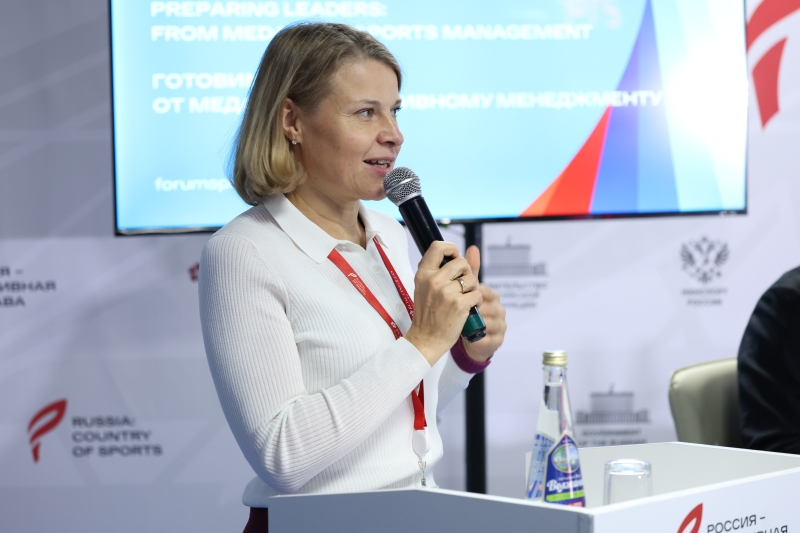
The 13th International Sports Forum "Russia – A Sporting Nation", held on November 5 - 7, 2025 in Samara, featured a business session titled "Training Leaders: From Medals to Sports Management". The session, focusing on athletes’ career transition issues, was facilitated by sports industry practitioner and RIOU lecturer Vladimir Voloshin.
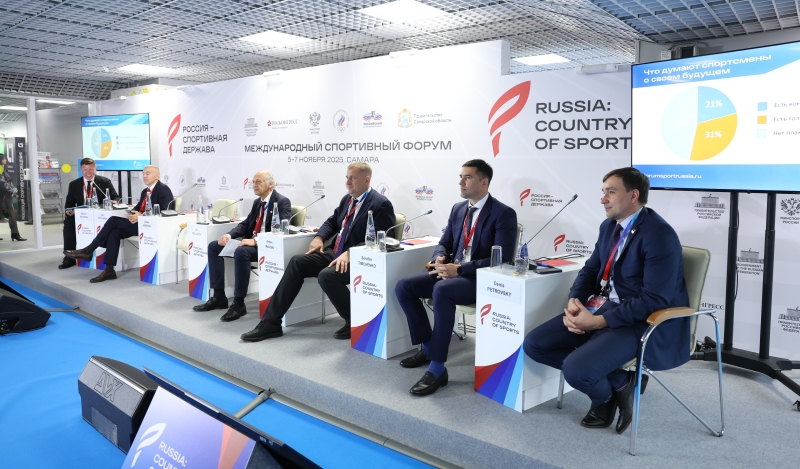
The transition from sport to a highly competitive business world remains one of the main challenges for athletes. Injuries, natural aging, competition, and other circumstances can lead to an abrupt end to a sports career. Without support, a clear life plan and professional skills beyond competitive sport, even Olympic champions risk being left without a job, self-identity, and a social lift. At the same time, their leadership qualities, discipline, and stress resilience are highly sought-after competencies in the job market.
Opening the discussion, RIOU Rector, full member of the Russian Academy of Education, Professor Lev Belousov noted that according to research data, 59% of athletes face difficulties with career transition, and 87% need psychological support. Education is becoming even more important today, allowing an athlete to prepare themselves for a major change in life and acquire the necessary competencies.
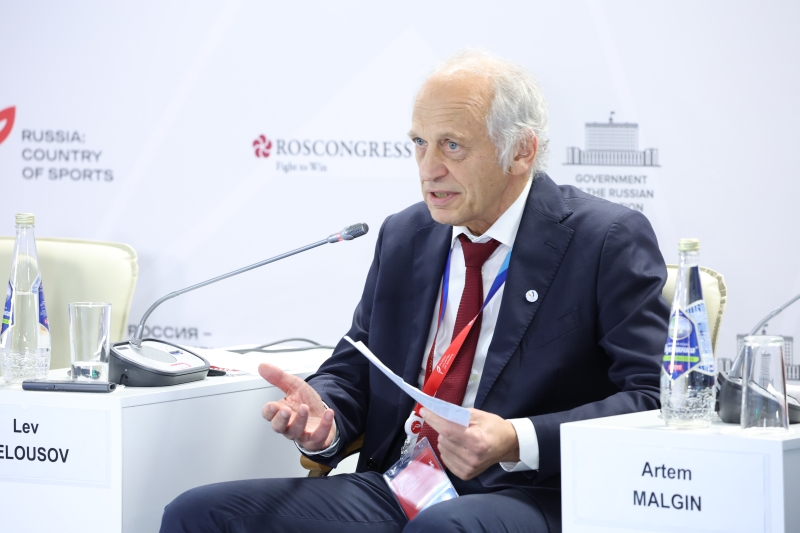
He said:
"At RIOU, we offer educational algorithms that do not interrupt the athletes’ training process or disrupt their competition schedules. We must work together with coaches and team managers so that young people entering the world of sport think about their future from day one and start learning. Statistics suggest that only one-third of active athletes realise that a lack of knowledge may hinder a successful career. The rest need to be convinced and encouraged to seek education. Athletes trust other athletes the most — so it's important to share successful experiences among the teammates. I advocate for an alliance between the athlete and the coach, the educational institution, and the future employer. Such an alliance ensures a safe future for the athlete without psychological stress, allowing them to make a smooth transition to the sports industry or any other field."
Over its 16 years of operation, RIOU has transformed its educational programmes to meet the current industry needs. More than 380 Olympic and Paralympic champions, as well as world and European medallists, have obtained training from RIOU through grants from the Russian Olympians Foundation, with the support of the Russian Ministry of Sport and the Russian Olympic Committee. Many successful RIOU graduates attended the business session in Samara, which was held to a full house.
Two-time Olympic champion, President of the All-Russian Union for the Support and Development of Children's and Youth Sports Anna Bogaliy described her studies at RIOU as follows: "If in 2012, when I had just completed my sporting career, I had known such a university existed, the first thing I’d have done is go study. Looking back at the competencies I acquired over time, I understand I could have done everything much more effectively and easily. When I meet active athletes, I always advise them to think about specialised education, where RIOU is one of the leaders."
Secretary General of the Russian Aquatic Sports Federation and a retired athlete Radmir Gabdullin shared his personal experience of making a rather difficult transition to a new career. The Federation currently places a high priority on helping the athletes realise their full potential. A number of athletes are already actively involved in the federation's work, projects and regional management. A prime example is two-time Olympic champion Evgeny Rylov, who combines his competing career with leading the national project "Swimming for All", thus proving that there is life after sport. Radmir Gabdullin also highlighted the key factors that may help an athlete build a safe future, including a clear understanding of their future professional path, pro-active attitude, and a constant thirst for knowledge, comparable to the drive for victory in sport.
Also present at the session were recently elected members of the Russian Olympic Committee's Athletes Commission: Commission Chairperson Vladlena Bobrovnikova; Olympic volleyball champion, former senator from the Belgorod Region Taras Khtey; and Olympic champion Bogdan Kiselevich.
RIOU Rector Lev Belousov proposed creating a special educational programme at RIOU for members of the Athletes Commission, funded by RIOU. The programme would seek to quickly immerse commission members in the context of sports management, providing a kind of Olympic 'inoculation' for them as future managers. Vladlena Bobrovnikova supported this proposal.
Taras Khtey suggested establishing a ‘diagnostic centre’ for athletes at RIOU. "The centre's task would be to test athletes completing their careers, understand their mindset, assess their IQ and other qualities. They could then be directed towards a particular path for further study or work," he said.
At the end of the session, the speakers were asked to complete the phrase "For every Olympian to become successful after finishing their career, it is necessary to...". The answers sounded like short formulas for success: live life to the fullest, be persistent, strive for new victories, keep the desire to develop, be curious, and remember the importance of family.